

What are microplastics?

Credit: greenoptimistic.com
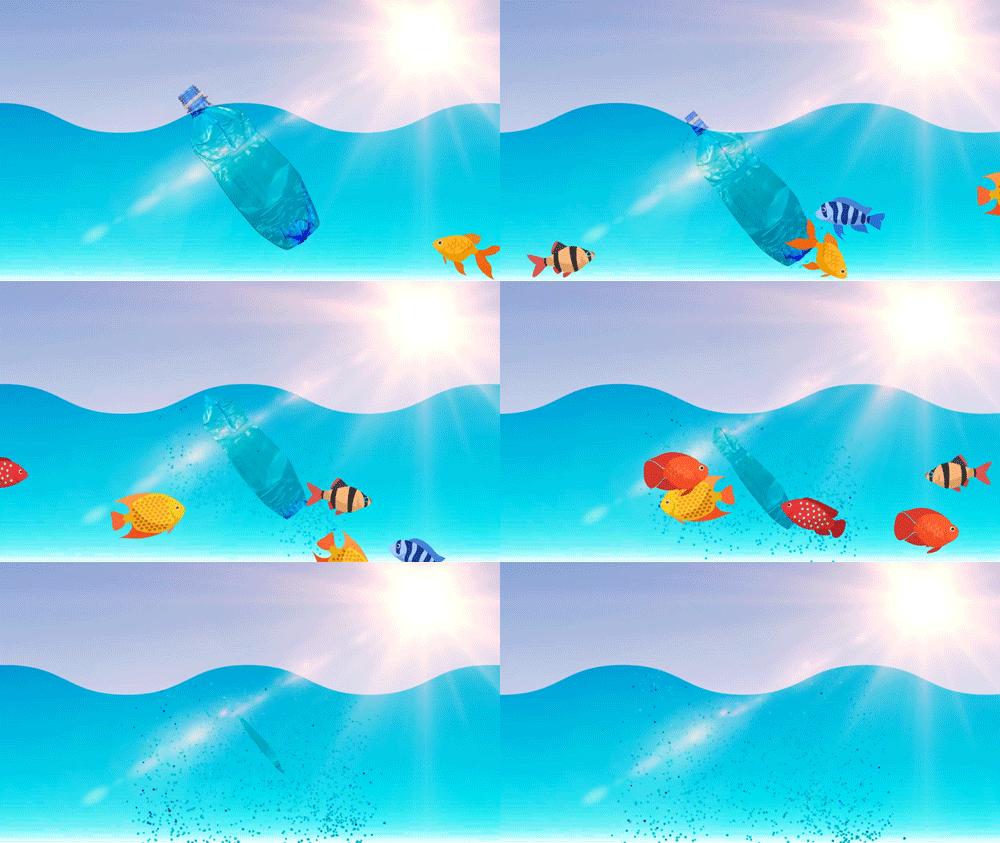
Credit: pulse.lk
-
Microplastics are extremely small pieces of plastic debris in the environment due to the disposal and breakdown of consumer products and industrial waste.
-
They are less than 5 mm in diameter.
-
One study estimated there are 15 to 51 trillion microplastics particles floating on the surface of the oceans.
-
Making plastics requires many fossil fuels and results in the emission of 1.7 billion metric tonnes of CO2 in 2015.
-
The plastics industry is the 4 largest CO2 emitter behind China, the U.S., and India.
Where do they come from?
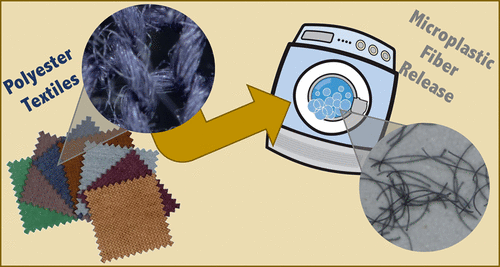
Synthetic Fibers:
-
1 million tons of synthetic fibers discharged into wastewater each year
Credit: acs.org

Credit: cbn.pixabay.com
Paints: 10% of oceanic microplastic pollution

Credit: abc.net
Tire Dust: 20 grams of tire dust released every 100 km

Secondary Microplastics:
-
8 million tons wash into the world’s oceans. Approximately 1 billion straws are used in 20 minutes
Credit: cnbc.com
Atmospheric Fibers:
-
3-10 tons reach the ground each year (Paris study 2015). Plastic dust contains endocrine disrupting chemicals. Plasticizers and chemical compounds are believed to absorb toxins in the home just as they are absorbed in water.
-
The plastic dust particles can be inhaled and enter your body through food and drink left in open containers.

Credit: orbmedia.org

Credit: scienceexplorer.com
Microbeads: 8 trillion polluted U.S. waterways in 2015
What are the risks?

Physical hazards:
-
Blocking the digestive system (Browne, 2007), Oxidative stress (Cole, 2011), Defective reproduction (Lassen, 2015), and Death (Mato, 2001)

Credit: Two Oceans Aquarium
Bioaccumulation:
-
Harmful chemicals (Gregory, 1996), Trace metals (Dris, 2016)Pathogens (Fendall, 2009)
.jpeg)
Credit: ezra.com
Health impacts:
-
Microplastics are in food, air, and water. The health effects are unknown and not much research has been done.
-
Microplastics less than 25 microns can enter the human body through the nose or mouth. Those less than 5 microns can enter the lung tissue.
-
Microplastics can accumulate heavy metals like mercury and persistent pollutants like polycyclic aromatic hydrocarbons (PAHs).

Credit: phys.org
Nanoplastics:
-
The size of nanoparticles are so small that atoms can fit on the surface of a particle.
-
More chemically reactive than microplastics.
-
Studies show polystyrene nanoplastics pass through the cell walls of aquatic organisms. This changed the behavior and endocrine function of marine species. There have also been experiments that showed nanoplastic crossing the cell walls in human intestines.